Learn how Retrieval-Augmented Generation finds relevant information in your own documents and uses it to ground the LLM's answers.
Let's think about it this way for a second
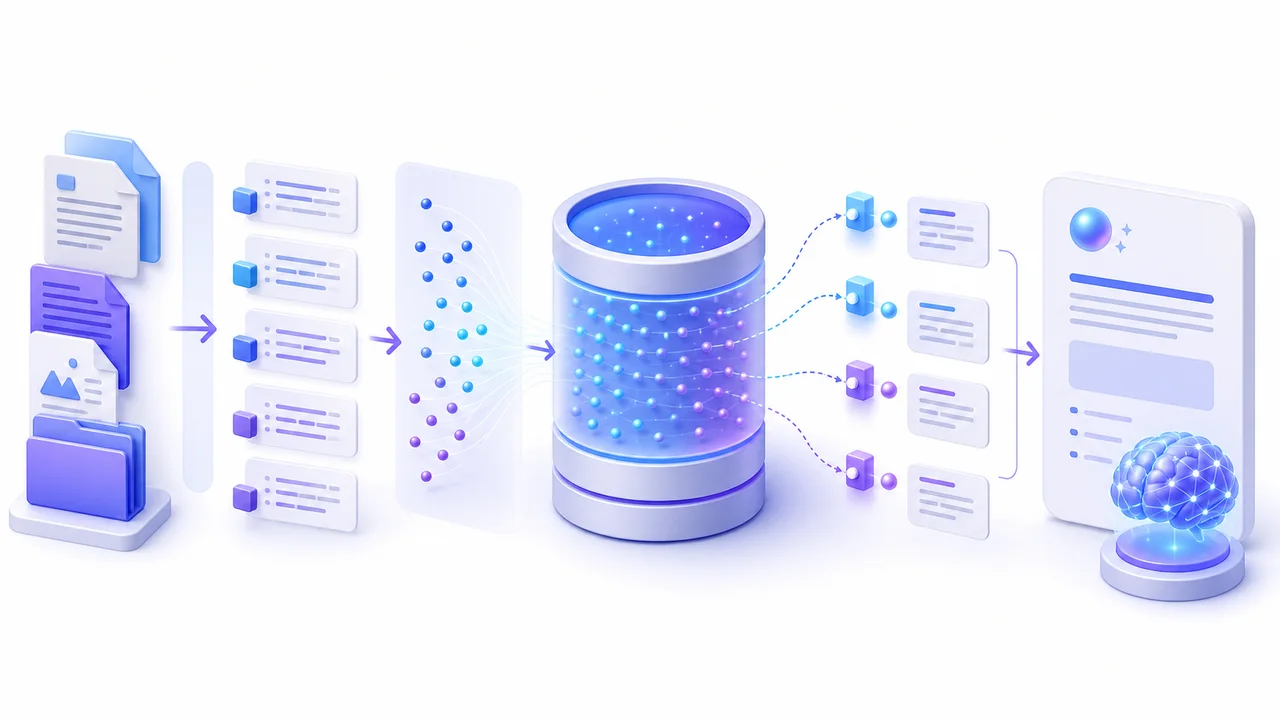
In RAG, you first find the document chunks relevant to the user's question, then feed that context into the prompt and ask the model to answer from it. It's not retraining the model — it's handing it the information it needs at answer time.
Let's connect this to everyday life
RAG is great for source-grounded answers like company policy, product docs, and knowledge-base Q&A. If retrieval is bad, generation will be bad too. Don't just check answer quality — check the retrieved chunks as well.
Let's try it hands-on together
Documents → Chunk → Embed → Vector store
                                  ↑
Question → Embed → Search ────────┘
                    ↓
Context + Question → LLM → AnswerYou'll be able to walk through the RAG pipeline step by step.5-minute try-it
Sketch out a RAG flow for five FAQ documents. Add a rule so that when retrieval finds nothing, it replies "couldn't find that information" instead.
A quick word of caution
Don't treat AI output as the final word. Have a human review anything important — including code and user data — before it's actually used.
OpenAI — Retrieval — OpenAI