Learn how vector databases store embedding vectors and handle filtering and similarity search.
Let's think about it this way for a second
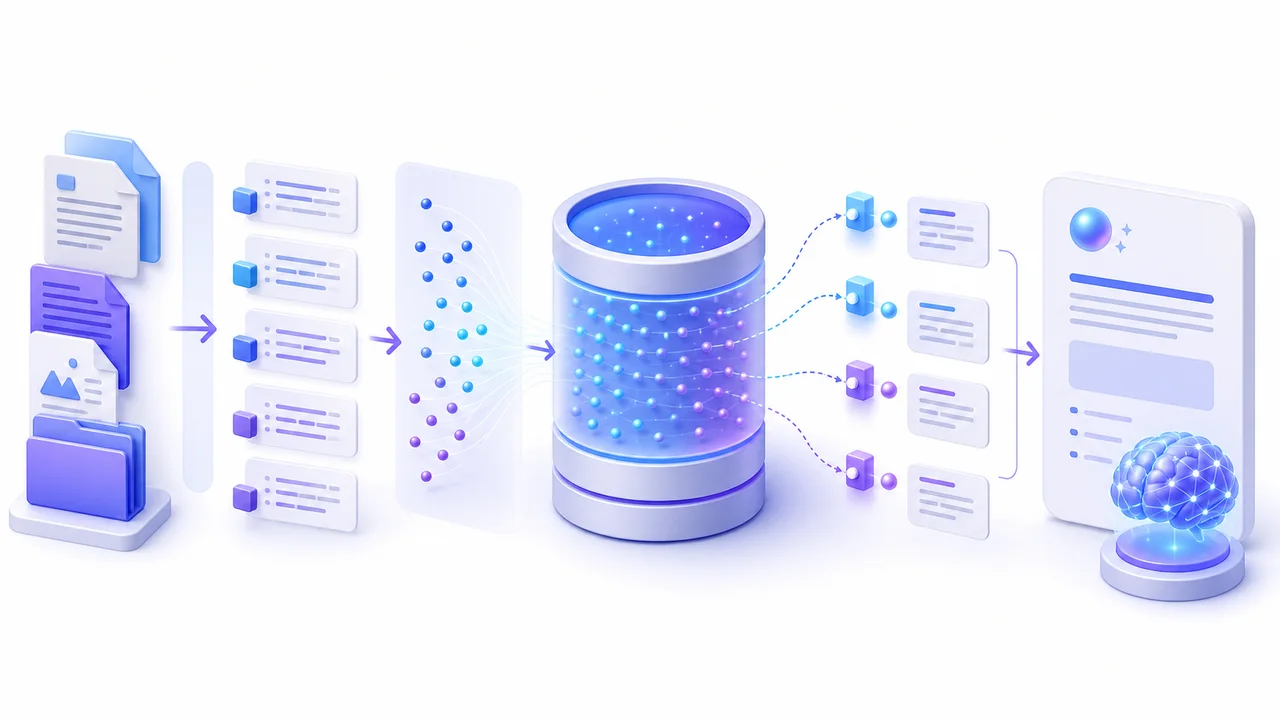
A vector database stores vectors along with metadata and quickly finds the items closest to a query vector. It's not a replacement for your regular database. Keep exact structured data like users and orders in a relational database, and pair it with a vector index for semantic search.
Let's connect this to everyday life
A RAG document should carry metadata beyond the vector itself — document ID, title, source URL, created date, access group, and so on. At retrieval time, filtering by permission alongside similarity keeps documents the user shouldn't see from leaking through.
Let's try it hands-on together
Record
├── id: policy-2026-01
├── vector: [0.012, -0.44, ...]
├── text: "ခွင့်ရက်မူဝါဒ..."
└── metadata
    ├── source: handbook.pdf
└── access: employeesYou'll be able to design the vector, text, and metadata of a vector store record.5-minute try-it
Write out the metadata fields, filters, and update policy for a school knowledge base. Separate student access from teacher access.
A quick word of caution
Don't treat AI output as the final word. Have a human review anything important — including code and user data — before it's actually used.
OpenAI — Retrieval — OpenAI